
Professional TPO Roof Repair & Installation in DFW | Martin Roofing
Energy-efficient TPO roofing installation and repair in DFW. Reduce cooling costs with a reflective “Cool Roof” system
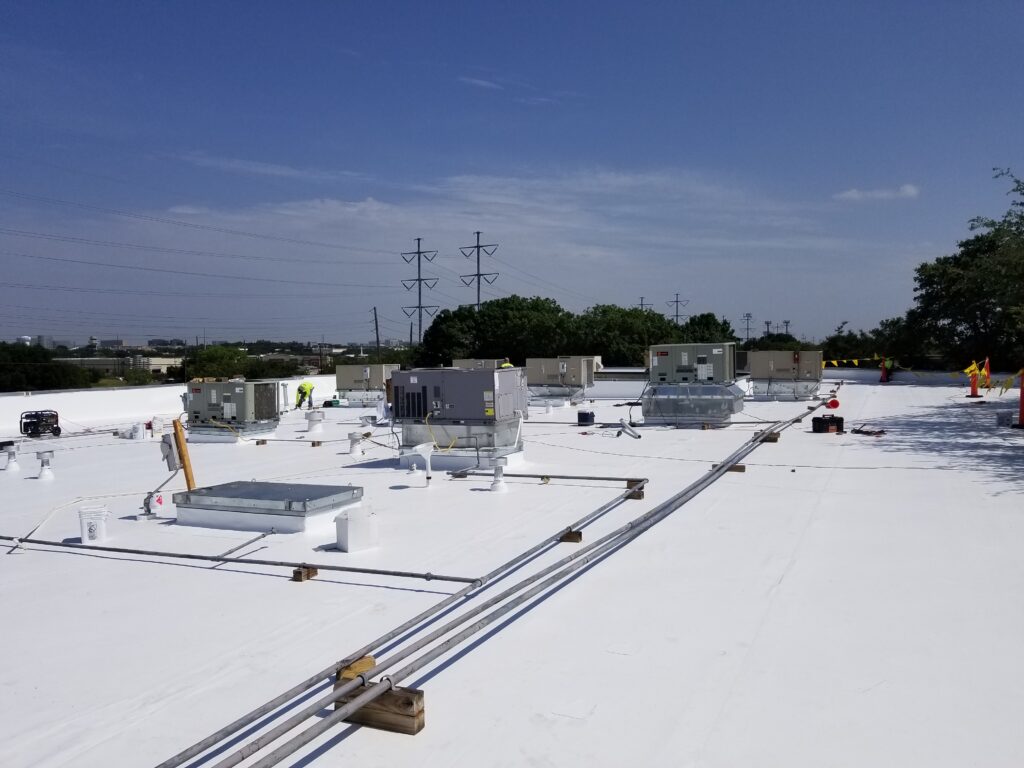
Energy-Efficient TPO Roofing for DFW Businesses
Expert TPO roofing and repair in Dallas/Fort Worth
Martin Roofing provides tough, energy-efficient TPO roofs. By using heat-welded seams, we give your building the best possible leak protection.
Our team serves businesses across Dallas, Fort Worth, Arlington, Allen, and Red Oak. Because we know the specific wind and weather rules for North Texas warehouses and retail centers.
Get your free quote today! (972) 780-0646
What is TPO Roofing?
TPO is a single-ply, bright white roof membrane. It is famous for being durable and reflecting the sun.
Unlike old-fashioned roofs, TPO uses heat-welded seams. In addition, our professional technicians use high- heat gun to fuse the sheets together. This process creates one solidsurface that is actually stronger than the material itself. Consequently, it stops the leaks that are common during DFW’s heavy rain seasons.
Built for the North Texas Climate
In North Texas, your roof must survive 100F+ summers and giant hailstorms. Because standard roofs can crack under this extreme stress, TPO is built to last much longer.
Reflect the Texas Heat: Our white TPO roofs are ENERGY STAR® certified. Specifically, they reflect up to 80% of UV rays, which can significantly lower your HVAC bills in July and August.
Hail and Storm Defense: We install thick (60-mil and 80-mil) TPO membranes. In addition, these materials meet strict Dallas building codes for wind and impact resistance, providing your best defense in “Tornado Alley.”
Complete Guide to TPO Roofing: Cost, Benefits, and Longevity
Thermoplastic Polyolefin (TPO) is one of the fastest-growing commercial roofing systems on the market. If you are considering a high-performance, cost-effective solution for your flat or low-slope roof, here is everything you need to know before making a decision.
Maximizing Energy Savings: Why TPO is the Best "Cool Roof" for Dallas
How Much Does TPO Roofing Cost?
On average, a TPO roof costs between $6 to $12 per square foot. Your final price depends on several specific factors:
Total Size: Larger roofs often have a lower cost per square foot due to bulk materials.
Current Condition: If your existing roof requires a full tear-off, the labor costs will increase.
Membrane Thickness: You can choose between 45, 60, or 80-mil options depending on your durability needs.
Insulation Type: High-efficiency insulation will cost more upfront but saves more money over time.
While TPO has a higher upfront cost than some asphalt systems, most DFW business owners see a full return on investment (ROI) within 5–7 years. This is possible purely through reduced electricity costs and significantly reduced stress on your HVAC systems.
Our Professional Installation Process
The first step in our process is a thorough inspection of your current roof deck. After we prepare the surface, our team installs a high-quality insulation layer to maximize efficiency. Our technicians then use specialized hot-air tools to weld the TPO seams together. Finally, we conduct a detailed water test to ensure your new roof is 100% watertight.
4 Big Benefits of a "Cool Roof"
Huge Energy Savings
High uv resistance reflects the Texas sun to lower your energy bills
Weather & Hail Protection
Built to handle the high winds and hail of the DFW Metroplex
Eco-Friendly
TPO is 100% recyclable and safe for the environment
Low Cost, High ROI
You get the performance of premium rubber roofing at a much better price
Why TPO is a "Low-Maintenance" Powerhouse
DFW property managers love TPO because it is so easy to take care of. If you want your roof to stay strong for decades, consider these three major advantages:
Resistance to Chemicals: TPO naturally resists oils, fats, and harsh chemicals. For this reason, it is the perfect choice for restaurants and industrial plants.
Protection Against Mold: The smooth surface stops dirt and debris from piling up. Consequently, this prevents the mold and rot that often ruin older roof types.
Simple Cleaning Process: A quick pressure wash is usually all you need to keep your roof bright and white. By maintaining this cleanliness, you keep your “Cool Roof” working perfectly and your energy bills low.
Specialized Solutions for DFW Commercial Properties
From warehouses in the Great Southwest Industrial District to retail centers in North Park, we understand the logistical needs of Dallas property managers. To help your business succeed, we offer specialized services that protect your bottom line:
Minimal Disruption: Our heat-welded installation is low-noise and fume-free. Therefore, your tenants can remain open for business while we complete the project.
Insurance Assistance: Dealing with hail claims in Texas is often a headache. However, we provide detailed digital inspections and documentation to help Dallas business owners navigate the insurance process for storm damage roof repair.
Specialized Hail Damage
In DFW, hail isn’t a matter of “if,” but “when.” Don’t let minor roof issues turn into expensive leaks after a Dallas storm. While TPO is tough, big hail can cause tiny cracks that you cannot see from the ground. Additionally, we provide forensic roof inspections to find these weak spots before they cause major water damage.
5 Warning Signs Your TPO Roof Needs Professional Attention
Before a minor leak becomes a major structural repair, watch for these common TPO failure points following North Texas storms:
- Open Seams: Look for areas where the heat-welded seams are “lifting.” Because this is the #1 cause of leaks, it requires immediate repair.
- Punctures or “Stars”: Hail can create small, star-shaped cracks. If you do not catch these early, water will seep into the insulation below.
- Ponding Water: In the event that water sits on your roof for more than 48 hours after a rain, your drainage or slope needs adjustment.
- Flashing Separation: Check the seals around HVAC units and vents. Over time, the Texas sun can cause these transition points to crack and pull away.
- Rising Energy Bills: When cooling costs spike, it often means your TPO membrane has lost its reflectivity due to age or dirt buildup.
Common TPO Concerns & Solutions
While TPO is one of the most reliable systems on the market, it must be installed correctly to handle the North Texas climate. To ensure your peace of mind, here is how we address the most common industry challenges:
Early Seam Leaks: Most leaks occur due to poor hand-welding. Consequently, we use automated hot-air welders that fuse the membrane at over 1,000F. This creates a permanent, monolithic bond that is physically stronger than the roofing material itself.
Thermal Expansion & Contraction: Texas often sees 40-degree temperature swings in a single day. Because of this stress, we install specialized expansion joints and use high-performance adhesives to allow your roof to move naturally without cracking.
Severe Hail Impact: Standard thin membranes cannot always handle “Tornado Alley” hail. Therefore, we recommend reinforced 60-mil or 80-mil membranes that meet the strictest high-velocity wind and impact codes in DFW.
The Anatomy of a High-Performance TPO System
A TPO roof is much more than just a white sheet. In fact, we install a multi-layered system built specifically to handle Texas winds and keep your building cool.
The TPO Membrane: We use a reinforced membrane with a strong internal mesh. This specific layer gives your roof the strength it needs to survive heavy Texas hail.
Precision Flashings: Most leaks happen around pipes and vents. To prevent this, we use heat-welded TPO roof boot parts to seal these spots. They create a permanent bond that lasts much longer than standard caulk.
TPO Roofing Colors: White is usually the best choice for energy savings. However, we also offer gray TPO roofing and tan colors if you need to match your building’s specific look.
The Secret to a Permanent TPO Roof Repair
At Martin Roofing, we don’t use tapes or glue that peel off over time. Instead, our team utilizes professional hot-air welding for every repair.
This specific process fuses the new TPO membrane to the old surface, creating one solid, unbreakable piece. Consequently, this is the major difference between a temporary “patch” and a permanent solution. Whether we are fixing a minor leak or installing a new system, our welding keeps your roof leak-proof against Texas wind and rain.
Professional TPO Roof Repair & Maintenance
Searching for TPO roofing repair near me? It is vital to hire a pro who knows thermoplastic tech. While rubber roofs often use glue, TPO is different. For this reason, it requires specialized heat tools to fix correctly.
Commercial Leak Repair: We don’t just “patch” leaks. Instead, our team uses a specialized heat gun for TPO roofing to fuse new material directly to your roof. Because tape is only a temporary fix, a heat-welded repair is the only way to stay watertight.
Restoration & Coating: If your roof is getting old, a high-quality TPO roof coating can add 5–10 years of life. In addition, it reflects UV rays and seals tiny cracks before they grow into major problems.
Maintenance Cleaning: Dirt and algae make your roof hotter. To solve this, our professional TPO roofing cleaner restores that “Cool Roof” brightness without damaging the surface.
TPO vs. PVC vs. EPDM: Which is Best for North Texas?
Choosing a flat roof membrane in the DFW Metroplex depends on two main factors: Heat Reflection and Seam Integrity.
TPO (The Efficiency Leader): TPO is the “Goldilocks” of North Texas roofing. Because it reflects up to 80% of UV rays, keeping your building significantly cooler than dark membranes. Furthermore, its heat-welded seams are physically fused together, making them stronger than the material itself.
PVC (The Industrial Specialist): This is the top choice for restaurants and food processing plants in Dallas. Alternatively, Commercial PVC roofing offers extreme resistance to chemicals, oils, and animal fats that can degrade other materials. While slightly more expensive, it is the industry standard for high-grease environments.
EPDM (The Traditional Choice): EPDM is a durable rubber, but it is typically black. In contrast to white membranes, EPDM acts like a thermal sponge in the 100°F+ Texas heat. For this reason, switching to TPO offers a much faster ROI through energy savings for most DFW commercial properties.
Why Dallas Chooses Martin Roofing for TPO
- Unmatched Local Expertise: Our team brings over 18 years of direct experience to the North Texas market.
- Manufacturer Certified: We are proud to be factory-certified installers for GAF TPO and Firestone systems.
- Proven Reputation: You can check our 4.9-star reputation from business owners in Dallas and Red Oak to see our commitment to quality.
The "Cool Roof" Advantage: Estimated Savings in Dallas
In cities like Plano, Arlington, and Dallas, building owners face some of the highest cooling demands in the country. Because of this climate, a “Cool Roof” TPO system isn’t just an expense—it’s an investment.
Surface Temperature Control: On a 100°F Dallas day, a dark roof can reach 160°F. In contrast, a white TPO roof typically stays under 110°F under the same conditions..
HVAC Longevity: By significantly reducing the heat load on your building, your AC units do not have to work as hard. Consequently, this extends the life of your expensive mechanical systems and reduces maintenance costs.
Average Monthly Savings: Many DFW commercial properties report a 15% to 25% decrease in monthly energy expenditures. This occurs immediately after switching from a dark BUR (Built-Up Roof) to a high-reflectivity TPO membrane.
Download Our Free TPO Maintenance Checklist
TPO Roofing Specialists Serving Dallas & Surrounding Suburbs
Rather than being just a generic contractor, Martin Roofing acts as your dedicated local North Texas partner. Because of this commitment, we provide expert TPO membrane roofing installation and emergency repairs across the entire Metroplex. Specifically, our service area includes:
Dallas: Downtown, Uptown, and the Design District.
North DFW: Plano, Frisco, Allen, and McKinney.
West Metro: Fort Worth, Arlington, and Irving.
Local Areas: Red Oak, Waxahachie, and Midlothian.
TPO Roofing FAQ
1. How long does a TPO roofing system last?
The average TPO roofing lifespan is 20 to 30 years. Factors like the thickness of the membrane (45-mil vs. 60-mil) and proper drainage of your TPO roof drains will determine the total years of service.
2. Can you paint a TPO roof?
While it is technically possible, you generally should not paint a TPO roof. The material is designed to be reflective in its natural TPO roofing colors. If your roof is dull or leaking, a specialized TPO roof coating is a much better alternative to paint.
3. What are the disadvantages of TPO roofing?
The main “disadvantage” is the quality of the seams if they are poorly installed. This is why choosing certified TPO roofing contractors is vital; if the heat-welder isn’t set to the exact temperature for the DFW humidity, the seams can fail prematurely.
4. What does TPO stand for in roofing?
TPO stands for Thermoplastic Polyolefin. This refers to the chemical composition of the membrane which allows it to be melted and re-solidified (heat-welded) multiple times.